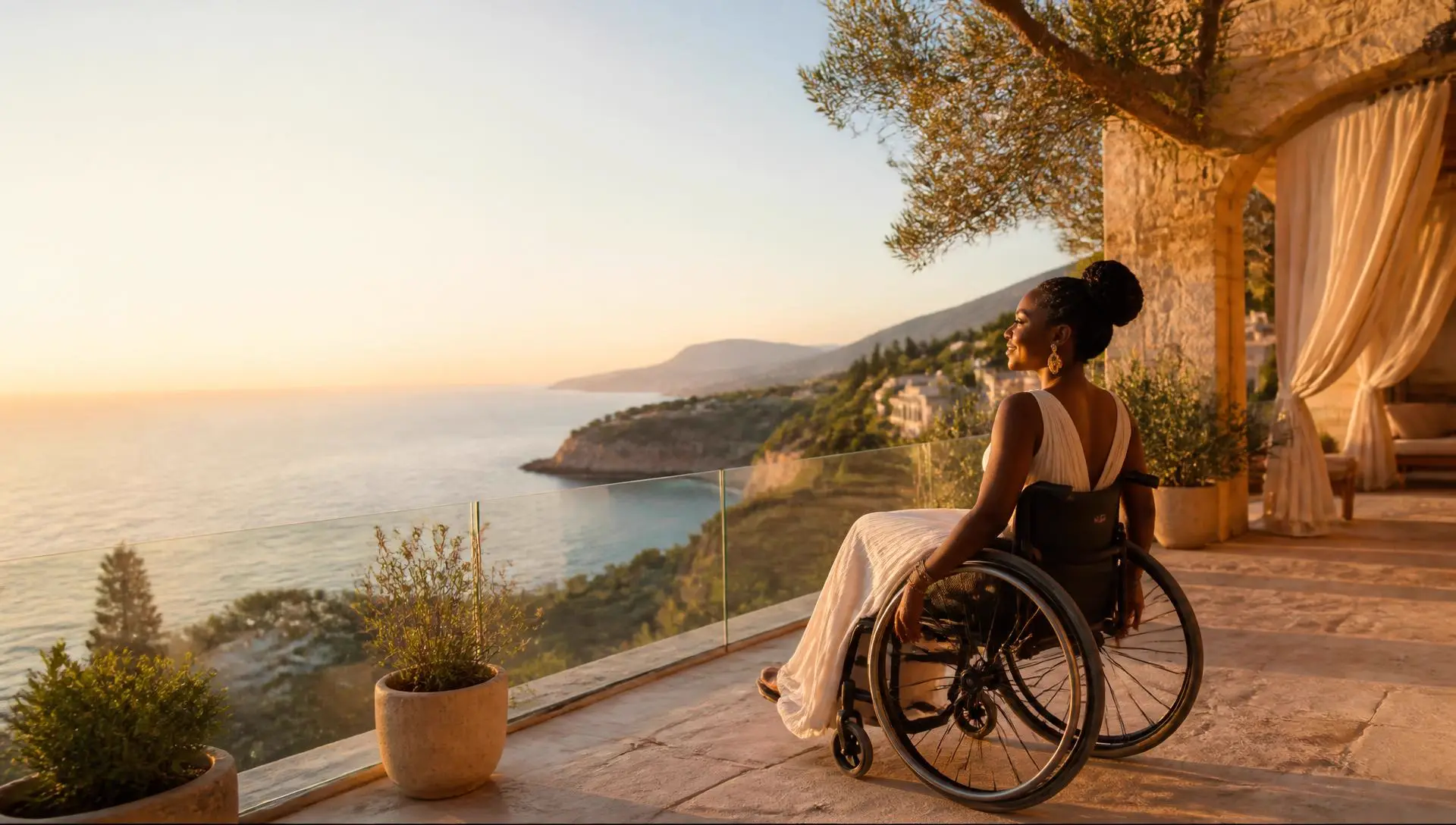
The World Should Feel Open to You.Let’s Plan Accordingly.
Thoughtful travel planning starts with understanding what you need — not assuming what accessible travel should look like.
“Accessible” Isn’t a Checklist.It’s a conversation.
Two people who use the same mobility device — or share the same diagnosis — can have completely different travel needs. One may care most about the bathroom layout. Another may care most about how far the room is from the restaurant, or how loud the lobby gets in the evening.
That’s why planning begins with the traveler rather than a template. The details below matter differently for different people, and part of my job is figuring out which ones matter for you.
Depending on the traveler, that might involve:
- Mobility
- Room configuration
- Bathroom accessibility
- Distances within a resort
- Transportation
- Sensory considerations
- Dietary considerations
- Communication
- Energy and stamina
- Equipment
- The airport experience
- Activities and excursions
Not every item applies to every traveler. That’s the point.
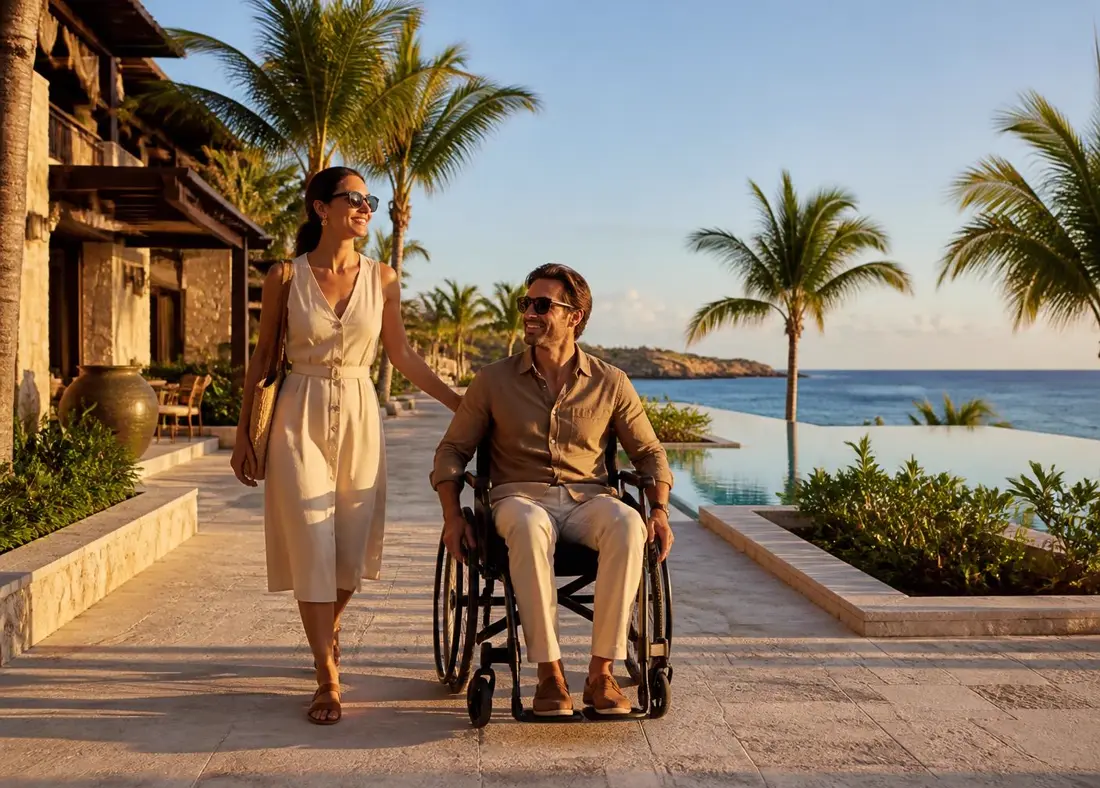
Because “Accessible” Shouldn’t Mean Settling.
A property can photograph beautifully and still be completely wrong for a particular traveler. A stunning cliffside resort with forty stone steps between the room and the water is stunning — and unusable for some guests.
Good recommendations consider how you will actually move through and experience a destination, not simply whether a hotel website labels a room “accessible.”
The goal isn’t just getting there. It’s being able to enjoy being there.
The Questions Matter Before the Reservation Does.
Depending on what you share with me, these are the areas I may research, verify where possible, and discuss with you and with suppliers before anything is booked.
Accommodations
Room layouts, entrances, bathroom configuration, property design, and the distances between the places you'll spend your days.
Transportation
Airport transfers, ground transportation, mobility considerations, and how you'll move between the different parts of the trip.
Destination Experience
Terrain, activities, excursions, restaurants, and the practical details that shape what the days actually feel like.
Travel Preparation
Destination requirements, documentation considerations, travel protection discussions, and preparing well in advance.
Individual Needs
Your own priorities, comfort, mobility, sensory considerations, equipment, or anything else that matters for this particular trip.
Sometimes the Details Other People Don’t NoticeMatter Most.
Families traveling with autism or other special needs often think about a trip differently — and those considerations deserve real planning attention, not a footnote at the end of a proposal.
Every family is different, and no two autistic travelers are the same. So we talk about what your family actually needs, and plan from there.
- Sensory environments
- Transitions
- The airport experience
- Crowds
- Schedules and routines
- Accommodations
- Dining
- Activities
- Preparation for unfamiliar experiences
Erika is a Certified Autism Travel Professional.

Thoughtful Planning Backed bySpecialized Training.
Accessible and inclusive travel planning takes more than good intentions. These are the areas Erika has trained in specifically.
Certified Autism Travel Professional
Specialized training in planning travel for autistic travelers and families with special needs.
Special Needs Group Advocate / Accessible Travel Advocate
Training focused on accessible travel, mobility equipment considerations, and inclusive trip planning.
Destination Wedding & Honeymoon Specialist
Specialized training in designing celebration travel and the guest experience surrounding it.
Luxury Is Being Considered.
Luxury isn’t simply thread count, champagne, or a beautiful lobby. Sometimes it’s much quieter than that.
- Not wondering whether you can enter the room you booked
- Understanding how far you'll need to travel across a property
- Knowing what questions were asked before you arrived
- Having options that reflect your actual needs
- Feeling considered rather than accommodated as an afterthought
That’s thoughtful travel.
The Planning Journey
- 01
Tell Me What You Need
We begin with an honest conversation about you, the trip, your priorities, your concerns, and what would make this experience work well.
- 02
Research With Those Needs in Mind
Destinations, accommodations, transportation, and experiences are evaluated through the lens of your individual requirements.
- 03
Ask More Questions
Where accessibility details matter, I research and communicate with suppliers rather than relying on assumptions or marketing labels.
- 04
Prepare for the Journey
Relevant travel information is brought together so you can prepare for the experience ahead with confidence.
- 05
Go Experience the World ♡
The purpose of all that preparation is the trip itself.
A Note on Accessibility Information
Wander World Destinations researches and communicates accessibility information based on the needs you share and the information provided by hotels, cruise lines, tour operators, transportation companies, destinations, and other third-party suppliers.
Accessibility features and conditions can change, and they are ultimately controlled by those third-party providers. For that reason, Wander World Destinations cannot independently guarantee every accessibility feature or experience — what I can do is ask the right questions, share what I learn openly, and help you make an informed decision.
You deserve to dream about the destination.The food.The view.The memories you’re going to make.
Not whether the trip was designed with you in mind. ♡
Your Needs Aren’t an Inconvenience.They’re part of the plan.
Tell me where you’d love to go, who’s traveling, and what would help you experience the journey comfortably and confidently. We’ll start there.